
-
The 1969 Pontiac Grand Prix: Where Luxury Met Muscle
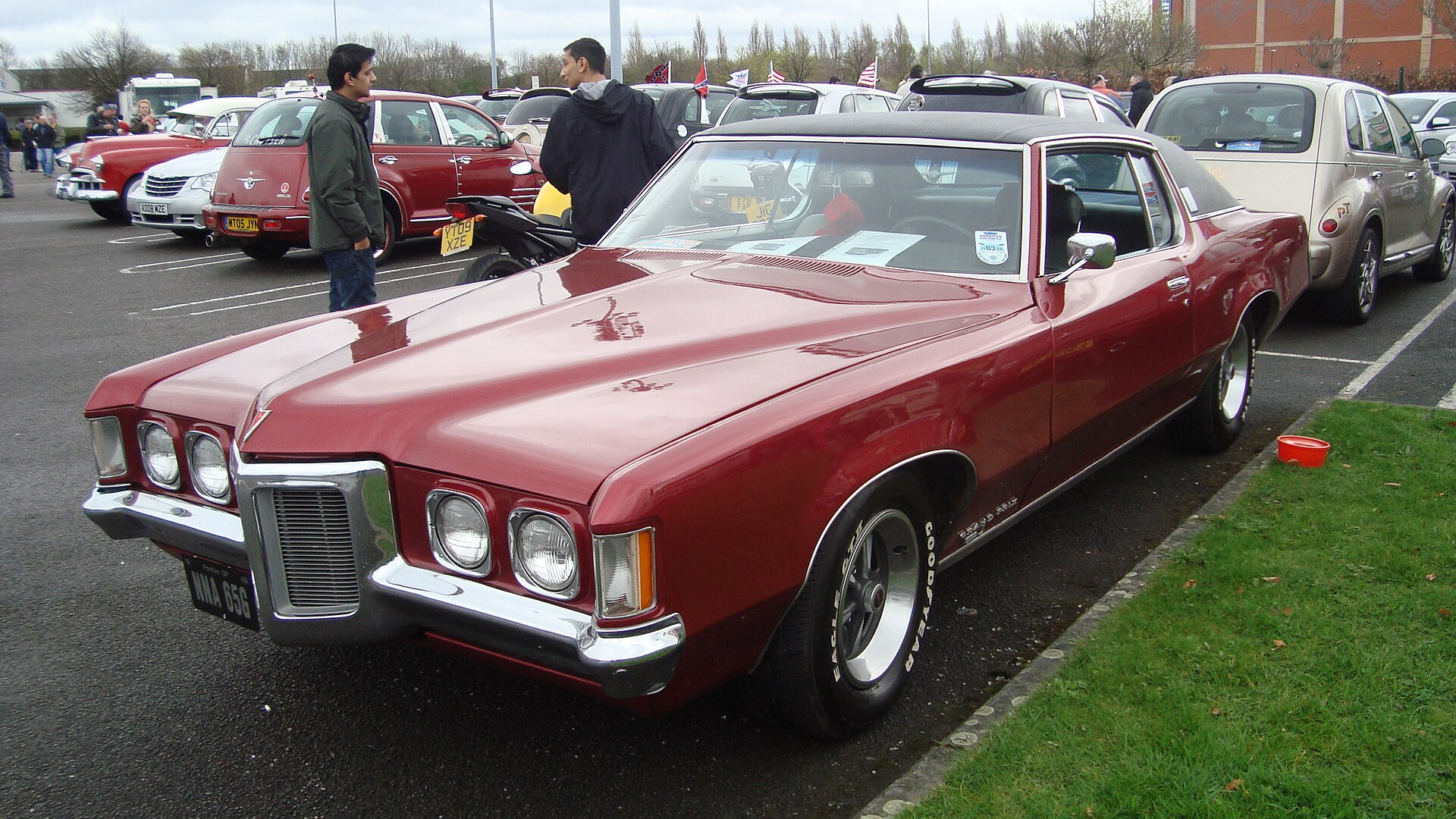
One of the most distinctive American cars ever built, the 1969 Grand Prix was John DeLorean’s final masterpiece—and a perfect snapshot of an era when big cars meant big personalities. —
Introduction
In 1969, Pontiac did something bold. They took their already iconic Grand Prix—a car that had been a luxury-oriented personal coupe since 1962—and completely reimagined it. The result was a car that looked like it came from another planet: a massive hood, a short deck, an aircraft-inspired cockpit, and stance that screamed performance even when it was parked. This wasn’t your grandfather’s Grand Prix. This was John DeLorean’s vision of the ultimate “step-up” car—a machine for the young professional who’d outgrown his GTO but wasn’t ready to drive something boring. —
The Man Behind the Machine
Before we talk about the car, we need to talk about the man. John DeLorean was the radical chief engineer (and later general manager) at Pontiac who had already revolutionized the American automotive scene with the 1964 GTO. His formula was simple: take a big engine, put it in a mid-size car, and watch the kids line up.
-
By 1969, DeLorean was about to leave Pontiac for Chevrolet’s top job, but he wasn’t done yet. The 1969 Grand Prix was his final statement—a car designed to be the “real man’s” alternative to the Buick Riviera, Oldsmobile Toronado, and Ford Thunderbird. It was more aggressive, more distinctive, and in many ways, more honest than its competitors. —
Design: A Hood Like No Other
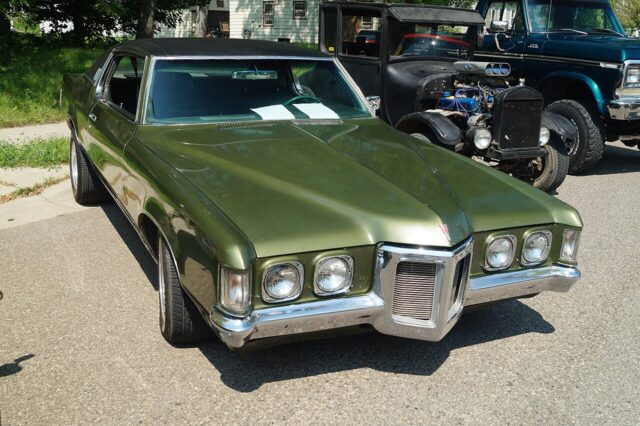
The most striking feature of the 1969 Grand Prix is—unapologetically—the hood. At the time, it was the longest hood of any production car in the world. This wasn’t for looks alone; it housed Pontiac’s powerful V8 engines and gave the car an unmistakable presence on the road.
Key Design Elements:
-
Chiseled bodywork with sharp, angular lines that set it apart from the more rounded Detroit iron of the era
-
118-inch wheelbase — relatively svelte for a car of this size, giving it nimble handling
-
Aircraft-inspired cockpit with a driver-focused dashboard
-
Two-door hardtop design with no B-pillar, creating a sleek profile
-
Hidden headlights (on certain models) that added to the aggressive front fascia
-
Short deck (rear section) emphasizing the long hood and athletic stance
-
-
The overall look was described by Motor Trend as having an “on-its-haunches stance”—like a predator waiting to pounce. It was low, wide, and ready to dominate. ─── Under the Hood: Power to Match the Looks The 1969 Grand Prix wasn’t just about looks. This was a performance-oriented machine. Engine Options:
| Engine            | Horsepower | Notes                        |

| ----------------- | ---------- | ---------------------------- |

| 400 cu in V8      | 265 hp     | Base engine                  |

| 400 cu in V8      | 330 hp     | 4-barrel carburetor          |

| 428 cu in V8 | 375 hp | Super Duty option | -
| 428 cu in Ram Air | 390 hp | Rare and highly sought after | -
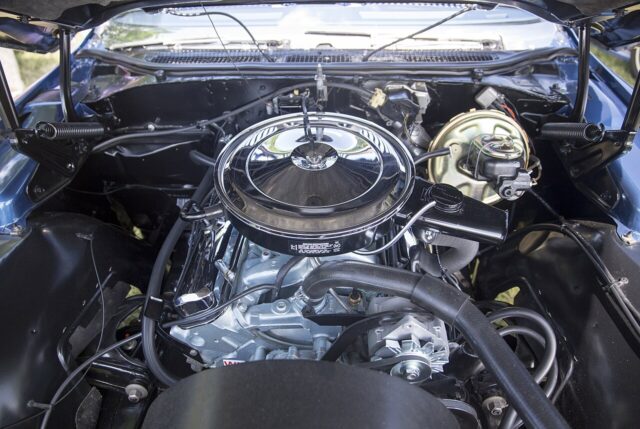
The 428 cubic inch V8 was the engine of choice for enthusiasts, and the Ram Air induction system—fed through a functional hood scoop—pushed output to an impressive 390 horsepower. This was serious muscle in a luxury wrapper.
276579P161338 Transmissions:
-
3-speed manual (standard)
-
4-speed Muncie manual (optional, for the serious driver)
-
Turbo-Hydramatic 400 (automatic, smooth but capable)
—
Inside: Luxury Meets Driver Focus
Step inside the 1969 Grand Prix, and you’re greeted by an interior that was ahead of its time:
-
Bucket seats with center console — standard
-
Full instrumentation including tachometer
-
Walnut woodgrain trim on the dashboard and door panels
-
-
-
Optional Strato bench seat for additional passengers
-
Factory air conditioning (a rarity and expensive option)
-
Tilt steering wheel adjustable to seven positions
-
AM/FM radio with optional 8-track tape player
The cockpit was designed around the driver. Everything was within easy reach, and the low-slung bucket seats held you in place during aggressive cornering. This wasn’t a car for cruising aimlessly—it was built to be driven. —
The J-Code: The Holy Grail
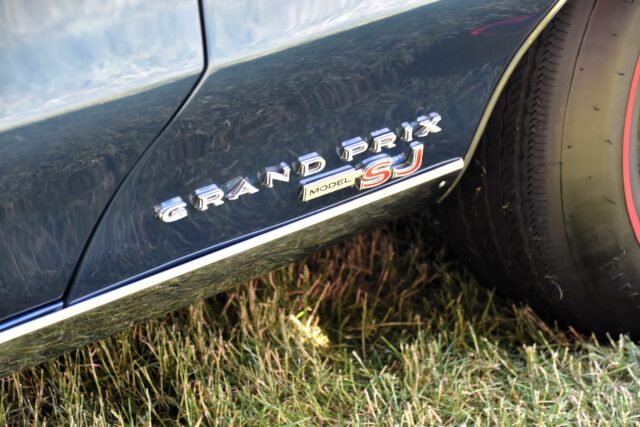
Among collectors today, the most coveted 1969 Grand Prix is the J-code car. These are models equipped with the 428 cubic inch Ram Air V8, and they’re recognized by the “Ram Air” lettering on the side of the car and the functional hood scoop. Only a few thousand J-code Grand Prixes were built, making them rare finds today. When one comes up for auction, it commands a premium—and for good reason. This was the ultimate expression of the 1969 Grand Prix formula: maximum performance in a luxury touring coupe. —
-
-
Legacy and Collectability Today
The 1969 Pontiac Grand Prix holds a special place in automotive history as one of the last great cars from the muscle car era—and one of the most unique designs to ever roll out of Detroit.
Why It’s Special:
-
Distinctive styling that still turns heads 55+ years later
-
DeLorean’s final Pontiac masterpiece before moving to Chevrolet
-
Performance credentials that rivaled true muscle cars
-
Relative rarity — production was modest compared to mainstream models
-
Investment potential — values have been climbing steadily
—
Conclusion
The 1969 Pontiac Grand Prix is more than a classic car—it’s a time capsule of an era when American manufacturers were bold, experimental, and unapologetic about building machines with personality. It combined the luxury of a personal luxury car with the heart of a muscle car, all wrapped in one of the most distinctive designs Detroit ever produced.
-
-
For DeLorean, it was the perfect exit. For enthusiasts today, it’s a treasure. And for anyone who sees one on the road, it’s a reminder of a time when cars had character—and hoods were long for all the right reasons. — Whether you’re a die-hard Pontiac enthusiast or just appreciate great American automotive design, the 1969 Grand Prix deserves a spot on your radar. It’s not just a classic—it’s a statement.
